
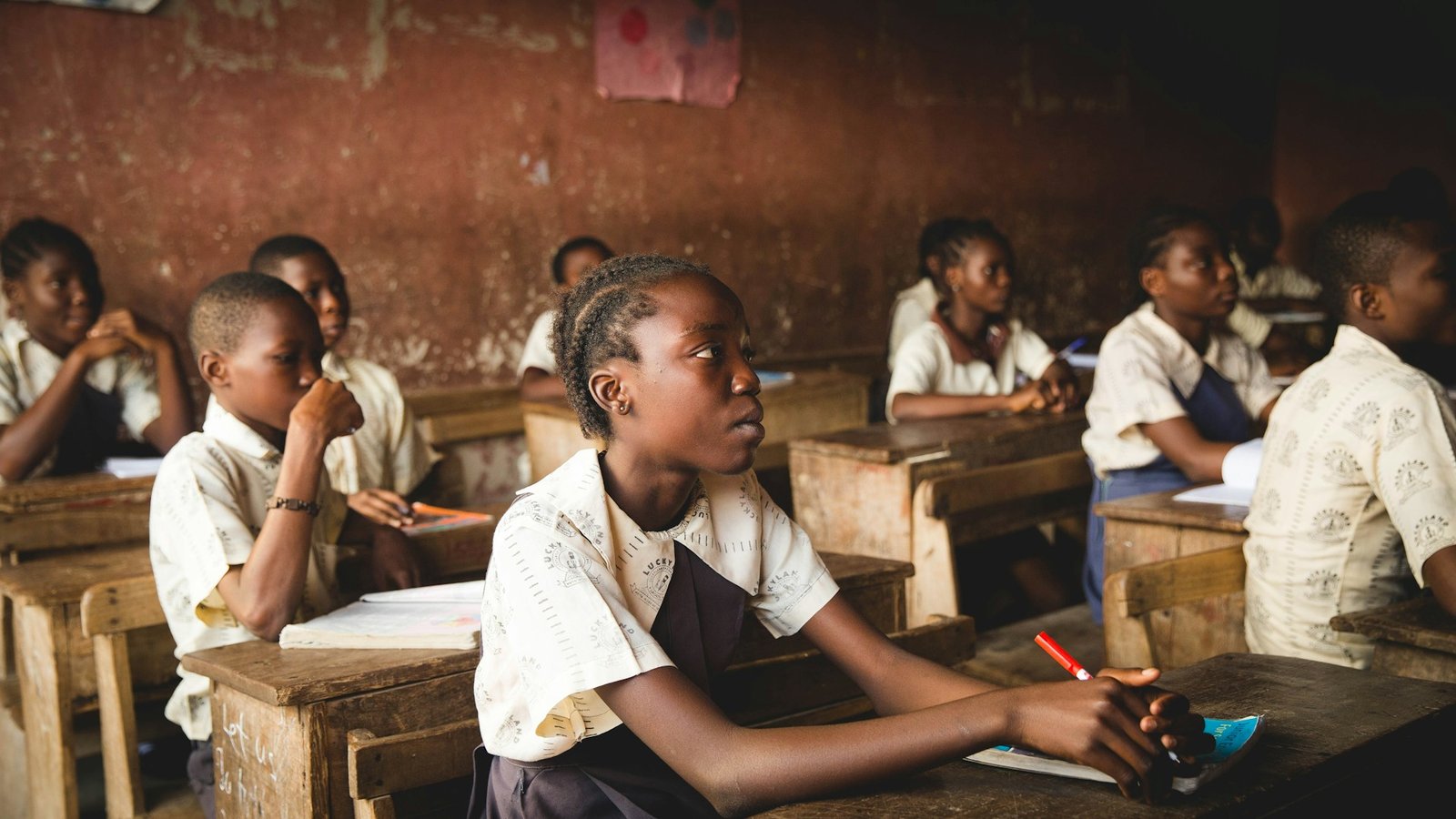
Education in Nigeria has a rich but uneven history. Long before colonial schools were established, Nigerians had sophisticated indigenous education systems. Today, Nigeria possesses one of the largest education systems in Africa, yet it continues to struggle with access, quality, and relevance. Understanding the evolution of education in Nigeria helps explain both its strengths and persistent challenges.
Indigenous Education Systems (Pre-Colonial Era)
Before the arrival of Europeans, Nigeria had well-established traditional education systems:
– Yoruba: Informal education through family, age-grade systems, apprenticeship, and oral traditions. Ifa priests preserved complex philosophical and scientific knowledge.
– Igbo: Emphasis on practical skills, character building, wrestling, farming, and trade. The *Ozo* title system rewarded excellence and moral uprightness.
– Hausa-Fulani (Sokoto Caliphate): Highly advanced Islamic education system with *Tsangaya* (Quranic schools) and advanced scholarship. Scholars like Usman dan Fodio and Nana Asma’u promoted widespread learning, including for women.
– Other Regions: Craft guilds taught blacksmithing, weaving, pottery, and medicine. Moral and cultural education was central across all societies.
This indigenous system produced skilled farmers, artisans, traders, administrators, and intellectuals.
Missionary and Colonial Education (1840s–1960)
Christian missionaries introduced Western-style education in the mid-19th century, starting in Badagry (1842) and Calabar.
Key Developments:
– Schools were built mainly in the South (Lagos, Calabar, Onitsha, Abeokuta).
– The North resisted Western education due to strong Islamic tradition, leading to serious North-South educational imbalance.
– British colonial government took over gradually through grants and inspection.
– Education was largely academic and designed to produce clerks, interpreters, and junior civil servants for colonial administration.
By independence in 1960, the South (especially the East and West) had significantly higher literacy rates than the North.
Post-Independence Expansion (1960–1980s)
After independence, education became a major priority:
– Universal Primary Education (UPE) launched in 1976 by the Obasanjo military regime.
– Massive expansion of secondary schools and universities.
– Creation of new federal universities (Ahmadu Bello University Zaria, University of Ibadan, University of Nigeria Nsukka, etc.).
– The 6-3-3-4 education system was introduced.
The oil boom years (1970s) funded huge investments in education infrastructure. Nigeria became known for producing some of Africa’s best-educated professionals.
Military Era and Decline (1980s–1990s)
Economic downturn, structural adjustment programmes, and military rule led to serious decline:
– Poor funding of education (often below 10% of national budget).
– Brain drain — many lecturers and professionals left the country.
– Frequent strikes by ASUU (Academic Staff Union of Universities).
– Falling standards and proliferation of “miracle centres” for exam malpractice.
Fourth Republic Developments (1999–Present)
Major Reforms and Programmes:
– Universal Basic Education (UBE) in 2004 — free compulsory education for the first 9 years.
– Introduction of the 9-3-4 system.
– Growth in private education sector (from primary to universities).
– TETFund (Tertiary Education Trust Fund) — major intervention for infrastructure and research.
– National Open University of Nigeria (NOUN) for distance learning.
– Increase in the number of universities (now over 170 public and private universities).
Notable Achievements:
– Nigeria has the largest number of out-of-school children in the world (though percentage has reduced).
– Strong performance in professional fields Nigerian doctors, engineers, lawyers, and IT professionals are highly respected globally.
– Rise of tech and entrepreneurial education (Andela, Paystack founders, etc.).
– Increased female enrolment, especially in the South.
An educated Nigeria is a powerful
Current State and Major Challenges
Despite progress, Nigerian education faces severe problems:
- Access and Equity: Millions of children (especially girls in the North and children in conflict zones) are out of school.
- Poor Quality: Many graduates lack practical skills. Employers complain about poor communication and problem-solving abilities.
- Inadequate Funding: Nigeria spends far below the UNESCO recommended 15–20% of budget on education.
- Infrastructure Deficit: Dilapidated classrooms, lack of laboratories, and poor internet in public schools.
- Curriculum Relevance: Heavy emphasis on rote learning rather than critical thinking, digital skills, and entrepreneurship.
- Teacher Quality and Welfare: Poor remuneration and training.
- Examination Malpractice: WAEC, NECO, and JAMB results are often undermined by leaks and cheating.
Recent Positive Developments
– Growing EdTech startups (uLektz, uLesson, etc.).
– Introduction of coding and robotics in some private schools.
– Increased private sector investment (Tony Elumelu Foundation, Dangote, etc.).
– Some states (Lagos, Anambra, Ogun) performing better through innovative policies.
– Rise in Nigerian students winning international scholarships.
Lessons from Nigeria’s Education Journey
- Education is the foundation of national development — countries that invested heavily in it (like South Korea and Singapore) transformed rapidly.
- North-South imbalance remains a major national issue.
- Private sector involvement can complement government efforts.
- Quality matters more than quantity — producing millions of graduates without skills creates social problems.
- Indigenous knowledge should be integrated with modern education.
The Way Forward
For Nigeria to achieve meaningful education development:
– Increase education budget to at least 15%.
– Strengthen technical and vocational education (TVET).
– Implement comprehensive teacher training and decent pay.
– Leverage technology for wider access (especially in rural areas).
– Review curriculum to emphasize critical thinking, digital literacy, and entrepreneurship.
– Public-private partnerships for infrastructure.
– Special focus on girl-child education and Almajiri integration in the North.
Education in Nigeria has come a long way from rich indigenous systems and missionary schools to one of Africa’s largest higher education systems. However, the gap between potential and reality remains wide.
The future of Nigeria depends heavily on fixing its education system. A well-educated population will drive innovation, reduce poverty, improve governance, and strengthen national unity. Every child denied quality education is a missed opportunity for the nation.
Nigeria must treat education as a national emergency. When we get education right, everything else, the economy, security, technology, and leadership, becomes easier.
An educated Nigeria is a powerful Nigeria.